
Instagram Trial Reels Explained: The Creator's A/B Test (2026 Guide)
Instagram Trial Reels are the platform's quiet answer to a question every creator has asked out loud: what if I could see how a Reel performs before my followers judge it? A Trial Reel is published only to non-followers through the recommendation graph, keeping it invisible to the people who already subscribed to your feed — so if it flops, nobody who matters sees the numbers.
This guide explains what Trial Reels actually are, why Instagram built the feature in 2024, how to publish one on iOS and Android in 2026, and — most usefully — how to read the performance signals so you know what to promote, what to discard, and what to learn from. If you want the broader picture of how the Reels algorithm decides whose feed your video lands on, our deep dive on Instagram Reels hacks is a good companion read.
Quick answer
Here is the TL;DR before we go into details.
- A Trial Reel is a Reel you publish that is hidden from your current followers and shown only to non-followers via Explore and recommendations.
- After about 24 hours, Instagram reports view, watch-through, like, and share signals from that cold audience.
- If the numbers are strong, you can share it to followers and it becomes a normal Reel on your grid.
- If they're weak, you leave it as a trial — your followers never see it and the Reel is quietly shelved.
- It is essentially A/B testing for Reels using strangers as the test group.
- Available for public personal, creator, and most business accounts on iOS and Android. Private accounts cannot use it — the feature needs a cold audience to work.
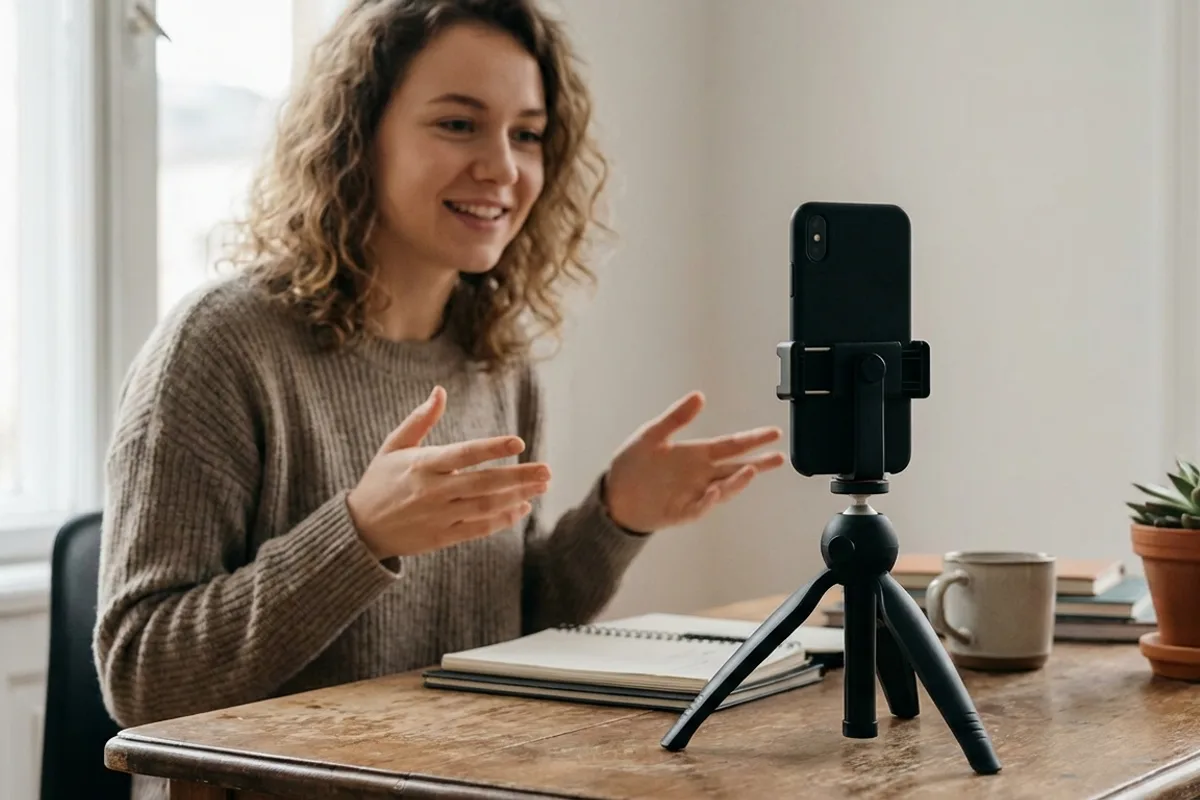
What Instagram Trial Reels actually are
A Trial Reel is a regular Reel with one important rule bolted on: your existing followers are filtered out of the distribution. The video gets pushed into the Reels feed and Explore grid of accounts that do not follow you, using the same recommendation model that powers any other Reel — topics, watch-history, audio trends, geography, and so on. But the people who already tapped Follow never see it, not in their main feed, not in the Reels tab, not on your profile grid.
That last detail matters. A Trial Reel does not appear on your public profile. If a follower visits your page while a trial is running, they see your previous Reels as if nothing new was posted. This is what makes it feel like a sandbox — the video exists on Instagram, strangers are watching it, but your follower graph is completely sealed off.
After 24 hours you get a performance summary. At that point you can do one of three things:
- Share to followers. The trial becomes a normal Reel, appears on your grid, and goes out to your main feed.
- Keep it as a trial. The Reel stays discoverable in Explore and on hashtag pages, but remains hidden from followers indefinitely.
- Delete it. Standard Reel deletion — the video is removed entirely.
This is fundamentally different from archiving, drafting, or using Close Friends. A draft is private to you. An archive is a Reel pulled back after posting. Close Friends is a whitelist. A Trial Reel is the opposite of all of those — it's public to strangers and private from your base.
Why the feature exists: the failed-Reel tax
Before Trial Reels, creators faced a nasty loop. You post a Reel. It underperforms. Your followers see the low view count on the profile grid. Your next Reel opens in a feed where the algorithm has already registered a miss, and your followers now associate your recent output with weak numbers. One flop drags down the momentum of the next three posts.
Worse, Reels performance is public in a way Stories never were. A story that flops disappears in 24 hours. A Reel with 400 views sits on your grid forever unless you delete it — and deleting sends its own algorithmic signal. Large creators developed elaborate workarounds: posting flops from burner accounts, deleting underperformers at 6am when nobody was watching, running every script past a focus group first.
Instagram's product team watched creators optimize for "feed perception" rather than for actual content quality, and Trial Reels was the official fix. The pitch is simple: take the risk out of experimenting so you post more variety, not less. In practice, the feature encourages the exact kind of behaviour the algorithm rewards — posting often, trying new hooks, testing new formats — without punishing the creator's feed.
If you want context on how Instagram's broader distribution logic handles risk-taking versus consistency, we break it down in our Instagram algorithm guide.
How to publish a Trial Reel (iOS and Android)
The flow is almost identical on both platforms in 2026. Here is the path step-by-step.
- Open the Instagram app and tap the plus icon in the top bar, then select Reel.
- Record or upload your vertical video as normal. Add audio, text, stickers, and cover frame.
- Continue to the final share screen where you normally write the caption and toggle cross-posting to Facebook.
- Scroll down past the caption and audience options until you see a section labelled Trial. Depending on app version it may appear as Share as trial or under Advanced settings → Trial.
- Toggle Share as trial on. A short explainer confirms the Reel will be shown only to non-followers for 24 hours and hidden from your grid.
- Tap Share. The Reel is now live to the recommendation graph only.
A couple of Android-specific notes. If you are on a very old build you may find the toggle buried deeper, under a gear icon on the share screen. Update the app if you don't see the option at all — Trial Reels requires a 2024-or-later build and a public account. iOS surfaces the toggle slightly higher in the flow but the wording is the same.
Your audio, caption, hashtags, location tag, and collab tag all work exactly as they would on a normal Reel. The only thing you cannot attach to a Trial Reel is a Promotion / boost — paid amplification is disabled until you share the Reel to your followers.
How to read Trial Reel performance signals
This is where the feature earns its keep. After 24 hours, open the Reel (it lives in a Trials tab in your profile's professional dashboard, not on the public grid) and tap View insights. You will see a compact dashboard with four numbers that matter.
- Views — total plays from non-followers. The absolute number depends heavily on your niche and audio trend, but this is the top-line traffic signal.
- Watch-through rate — what percentage of viewers made it to a meaningful point in the video (typically 50% or 75% depending on length). Higher is better; this is the single most predictive metric for whether Instagram will keep distributing it.
- Likes — simple engagement from cold viewers. Noisy in isolation, useful as a ratio against views.
- Shares — the strongest signal of all. A share from a non-follower means the Reel reached out past its first-ring audience and into a second ring. Shares drive long-tail distribution far more than likes do.
Instagram also shows follows generated by the Reel — how many non-followers who watched it then tapped Follow. For a trial, this is the one number that translates directly into permanent value. Even if the Reel never goes out to your main audience, follows it earned are real.
What counts as "good"? There is no universal threshold, but a rough rule of thumb for a mid-sized account (5k–50k followers): a Trial Reel beating 3× your normal Reel view count from cold audiences, with a watch-through above 50% and at least a handful of shares, is a winner. Benchmarks in niche content (education, finance, specialist hobbies) run lower on raw views but much higher on follows-per-view — so weight the follow conversion rate heavily if that matches your niche.
When to convert a Trial Reel to a regular Reel
The conversion decision is simple if you treat Trial Reels like an experiment instead of a lottery.
Convert if:
- Views and watch-through beat your Reels baseline.
- Shares are non-zero (ideally 5+ for a small account, 50+ for a mid-size account).
- The follows-per-view rate is at least as good as your account average.
- The comments — even a handful — are on-topic rather than low-effort spam.
When you convert, the Reel moves to your grid, goes into the main feed of your followers, and begins its second life as a normal Reel. The cold-audience performance data you already earned is carried forward; Instagram is less skeptical of a Reel that already proved itself with non-followers, which usually means the follower-side rollout lands softer and steadier than a cold launch.
One nuance: convert while momentum is still live. If you wait three days past the trial window, the second-wave distribution tends to be weaker. The sweet spot is within 24 to 48 hours of the trial ending.

When to discard a Trial Reel (and what to learn)
Discarding is the whole point of the feature — it has to feel guilt-free or you won't use it. Leave a trial shelved when:
- Watch-through is below 30% on a short Reel or 20% on a longer one.
- The view count is flat or trending down through the 24-hour window, instead of accelerating.
- Likes-to-views and shares-to-views ratios are well below your usual Reels.
- Comments are hostile, off-topic, or bot-like.
Discarding does not mean deleting. Leaving the Reel as a permanent trial keeps it in Explore and on hashtag pages, where it can quietly accumulate views from new non-followers for weeks. Some creators deliberately keep weaker trials running as a slow drip of top-of-funnel discovery. It costs nothing and risks nothing.
The real value of a discarded trial is the diagnostic. Pay attention to where it failed:
- Low views, high watch-through? The hook was fine but the audio/topic did not trend.
- High views, low watch-through? The hook worked but the payoff did not.
- High watch-through, no shares? The content was watchable but not memorable.
- High shares, no follows? The Reel was shareable but your profile didn't convince viewers to subscribe — a profile grid and bio problem, not a content problem.
Two or three diagnosed trials will teach you more about your niche than twenty blind posts.
Strategic uses: what Trial Reels are actually good for
A Trial Reel is not just a safety net. Used deliberately it is one of the most powerful R&D tools Instagram has ever shipped to creators.
Testing hooks. Record the same body-content twice with two different opening three-second hooks. Publish both as trials. The cold audience will ruthlessly sort which opener stops the scroll. Bring the winning hook back for the real posting cadence.
Validating new niches. If you've been posting beauty content and you want to test a move into wellness, a Trial Reel lets you see whether the recommendation engine will actually route wellness content to a relevant audience before you risk confusing your follower base.
Seasonal and trending audio bets. Trending audio decays in days. A Trial Reel lets you attach to a trend without cluttering your grid if the trend fizzles before your upload finishes processing.
Collaboration dry runs. Thinking about a long-term creator partnership? A Trial Reel together keeps your follower graph out of the early data, so you're both judging on cold-audience numbers rather than on your existing fans being polite.
Low-risk format experiments. Long-form Reels, silent Reels, text-only Reels, slideshows rebuilt as Reels — any format your account doesn't normally post. Test cold first, commit after.
Pair trial-driven experimentation with a solid captioning strategy and you can move through twice as many hook and format tests per month as you could before the feature existed.
Limitations: what Trial Reels do not do
The feature is useful but narrow. Know what it will not tell you.
- No live engagement from your audience. The people who already trust you, who would comment first, who would screenshot and share — they are deliberately excluded. A trial tells you how strangers react, not how your community reacts.
- Dialogue-heavy Reels underperform in trials. Cold audiences have no context for inside references, running jokes, or follow-up content. If a Reel depends on viewers already knowing you, it will look weaker in trial than it would with followers.
- Niche loyalty signals are invisible. A Reel that earns three long, thoughtful comments from regulars is valuable — but trials cannot surface that kind of signal because those viewers are filtered out.
- Geographic skew. Cold-audience distribution sometimes pushes Reels into regions where you have no follower base. A trial that flops in a region you don't care about is not the same as a weak Reel.
- No paid amplification during the trial. You cannot boost a Trial Reel; promote is locked until it's shared to followers.
- No Stories cross-post. You can't share a Trial Reel to your Story — the point is invisibility from your followers, and a Story share would break that.
Treat Trial Reels as a cold-audience test, not a referendum. They tell you one specific thing — will strangers click, watch, and share this — and they tell it cleanly. They do not replace the rest of your analytics, and they are not a substitute for understanding what your actual audience wants from you (which is closer to a Notes-style lightweight conversation than a metric dashboard).
A simple weekly Trial-Reel workflow
If you want a template, this one works for most creators posting three to five Reels a week.
- Monday: publish two Trial Reels with different hooks on the same core idea.
- Tuesday night: check insights. Promote the winner to followers, archive the loser as a permanent trial.
- Wednesday: publish one normal Reel using the lessons from Monday.
- Thursday: publish one Trial Reel testing a new format or trending audio.
- Friday night: decide on conversion. If it wins, Saturday morning goes to followers.
- Weekend: rest, batch-film the next week, review the four trials as a set, not individually.
The win is not any individual Reel. The win is that your grid only shows content that has already been vetted — which compounds over months into a profile that looks stronger and more consistent to new visitors.
FAQ
Can my followers see my Trial Reels at all?
No. A Trial Reel is excluded from the feeds, Reels tabs, and profile grids that your followers see. The only way a follower could stumble on one is if someone outside your follower graph shares it to them directly — and even then it loads as a standalone Reel, not part of your profile.
Do Trial Reels count toward the algorithm's view of my account?
Yes and no. They count as Reels activity — Instagram sees you posting — which is good for overall account momentum. But the view, like, and comment numbers are not folded into your profile-level engagement rate for followers. So a flopped trial doesn't hurt your follower-facing metrics.
How long do I have to decide whether to share a trial to followers?
There is no hard deadline. You can convert a trial days or weeks later. Practically, the algorithm gives the biggest secondary push within 24 to 48 hours of the trial window ending — after that, conversion still works but the follower-side rollout is quieter.
Can I run multiple Trial Reels at the same time?
Yes. There is no limit on concurrent trials, which is exactly what makes hook-testing viable. Post two trials within the same hour and compare their 24-hour numbers side-by-side.
Does Instagram tell non-followers that they're watching a "trial"?
No. To the viewer, a Trial Reel looks and behaves like any other Reel in their Explore or Reels feed. The "trial" framing is entirely creator-side.
Why can't I see the Trial option on my account?
Three common reasons: your account is private (trials need a cold audience, so only public accounts qualify), your app build is old (update to the latest version), or your account has reduced features due to a recent policy strike. Business accounts in certain regulated categories also occasionally lose the toggle.
Is a Trial Reel different from a Close Friends Reel?
Completely. A Close Friends Reel is visible only to accounts on your Close Friends list — people you already know and trust. A Trial Reel is visible only to accounts not following you — strangers. They are opposite features for opposite use cases.
Final word
Trial Reels are the closest Instagram has come to giving creators a proper R&D surface. Used casually they take the sting out of a flop. Used deliberately — with paired tests, diagnostic reading, and a weekly workflow — they turn Reels into a repeatable system instead of a lottery ticket.
The creators who win on Instagram in 2026 are not the ones who get lucky with one viral Reel. They are the ones who post consistently, learn from cold-audience data, and let the grid show only the wins. If you want the next layer — tightening the rest of your profile so the follows earned by good Reels actually stick — our guides on Instagram Stories and captions that travel pair naturally with a trial-first posting cadence.
Try two trials this week. Promote the winner. Shelve the loser without guilt. Read the numbers. Do it again next week. That is the whole feature.
Related Posts
- Reach New Level Using These Instagram Reels Hacks
- 300+ Instagram Notes Ideas: Cute, Funny, Aesthetic & How to Post One (2026)
- 8 Smart Ways to Hack the Instagram Algorithm
Дякуємо ❤️ за читання блогу Hiketop+
Окрім публікації цікавих статей, ми пропонуємо платформу для обміну, яка дозволяє отримати справжніх підписників в Instagram без будь-яких витрат. Мільйони вже спробували Hiketop+, щоб просувати свої профілі. Відкрийте для себе наш безкоштовний додаток, доступний як для iOS, так і для Android, щоб збільшити ваші лайки, підписників та коментарі в Instagram.